Pantry moths belong to the genus Plodia in the family Pyralidae which are the common pests of the stored grains. Anything that derives from plants or plant materials could find Pantry moth infestations. They live in the food grains such as pulses, cereals, flour, and the products made with any of such food items. Usually, they’re carried with the food that arrives infested from the market or a food source. They also lay their eggs on these food items, hatching takes place, and the infestations go beyond imagination. An adult female could lay between 100-300 eggs during one session. Egg-laying would increase if the temperature remains between 20-28 °C. Anything above or below this temperature ceases their ability to reduce egg-laying whereas it stops above 35 °C and below 0 °C. A pantry moth trap could show you both the adult females and eggs captured in a natural way since these pheromone traps are purposefully built to check their infestations below the normal limits. The color of the eggs could vary from pale yellow to white and they’re very tiny and ovate. Often, the food grains that could pantry moths’ infestation from outside include maize grains and its products, beans, peas, spices, and whole nuts that carry a bit more moisture than recommended during processing or transporting.
Prevention
There are several natural pheromone traps and pantry moth traps that are typically designed to help the capturing purpose since the infestations to food materials are not accepted at any cost. Usually, these traps attract the pantry moths due to a typical smell that resembles their females. As the entire insect families live close to each other, and in colonies, and males travel long distances to mate their females. The same happens when a food moth pheromone trap installs in your kitchen to attract a male moth that becomes prey to a kitchen moth trap.
The inspection of the infestation sites is of top importance. Carefully inspect food items in containers. If the lids of some containers remain open for a long period, there’s a prevalent chance that it would have pantry moths’ infestation along with the eggs that would hatch soon to spoil the items in the neighboring cabinet in the kitchen. A pantry moth killer is never suggested as it kills the entire population within your kitchen that may contain harmful ingredients. The residues of these chemicals could become dangerous for the kids, pets, and especially for the handlers. If you find holes in the stored grains, it is another sign that infestations may exist in other food items around as well. The food items that get infested need to be discarded away from the home as their flights could bring another infestation if discarded improperly. Always remember that extra moisture and the temperature range already mentioned above develop the best adaptable environment for their survival and triggering growth in your kitchen. A sticky pheromone trap could probably help you to check pantry moths’ infestations because it only attracts them but, they’re captured with ease.
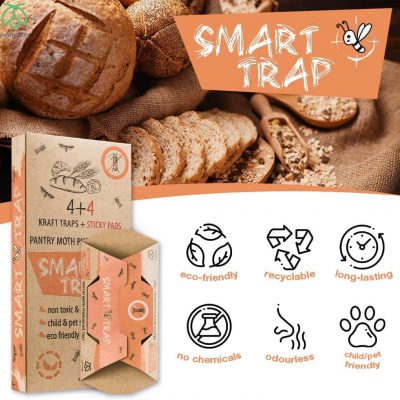
Pestmatic does the same with a Smart Trap that mixes Kraft traps with the Sticky Traps that work naturally and develops a Kitchen moth trap that serves multiple tasks by attracting and capturing pantry moths. The Smart Traps are highly effective and last longer with biodegradable features controlling Pantry moths along with other pests that enter