Pest guides · 6 min read
How to Get Rid of Ants in the House (and Keep Them Out)
Ants indoors follow scent trails to food. Find the entry point, remove food, wash away the trail and keep a barrier at sills and doors. Step-by-step + FAQ.
Updated 19 November 2026
Short answer: ants come indoors because a scout has found food and laid a scent trail for the rest of the colony. To get rid of them, follow the trail back to the entry point, put sweet food in sealed containers, wash the ants and the trail away (wiping alone leaves traces), seal gaps where you can and keep a barrier on sills and thresholds, renewing it after rain.
Why do I have ants in my house?
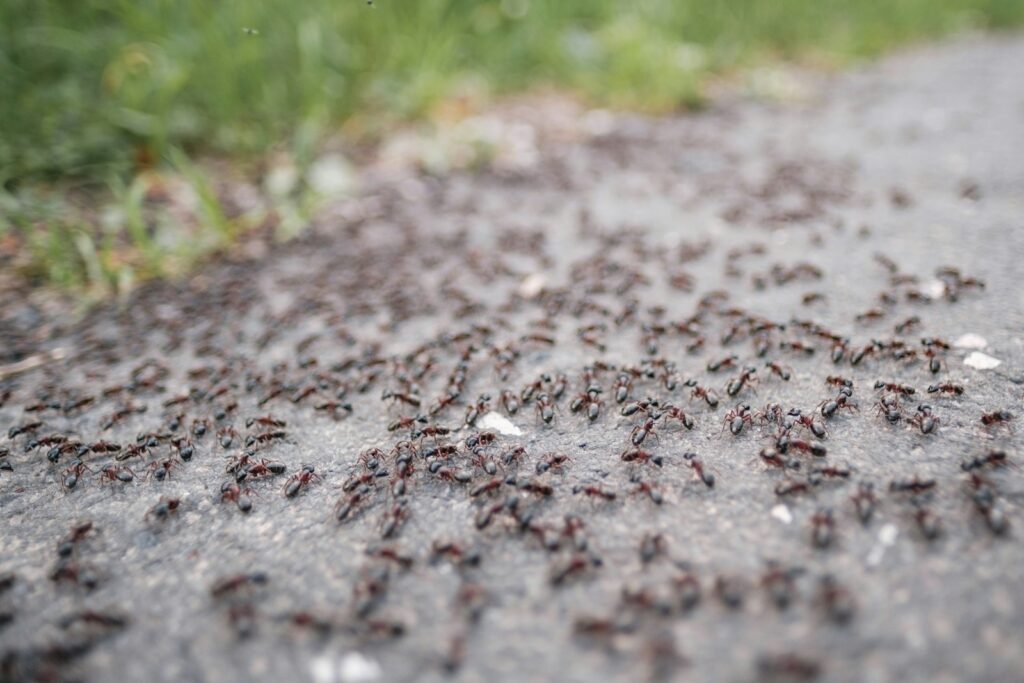
Because one worker found food and the others are following her. Ants communicate with scent: a forager that finds sugar, crumbs or pet food marks the route home, and within hours a line of ants is walking the same path across the worktop. In UK homes this is usually the black garden ant (Lasius niger), which nests outside, under paving or in lawns, and only comes indoors to forage. The RHS describes ants as most active from April to October, which is why kitchen invasions peak in spring and summer.
Ants in the house are a nuisance rather than a health hazard, but a trail will not stop on its own while there is food at the end of it.
How do I find where ants are getting in?
Follow the line of ants backwards, ideally in the morning or evening when they are busiest. Typical entry points are door thresholds, gaps around window frames, cracks in tile grout or skirting, holes where pipes and cables come through the wall, and plant pots on window sills. Mark each spot with tape: these are the places you will clean, seal and treat.
What is the fastest way to get rid of ants in the house?
Remove the food, then break the scent trail and block the route in. Work through these steps on the same day:
- Remove the reward. Put sugar, honey, jam, cereal and pet food in containers with tight lids, wipe up crumbs and sticky spills (under the toaster and kettle too) and use a bin with a lid.
- Wash away ants and their trail. Wiping kills a few workers but leaves the scent route; washing the whole path with a detergent solution or a ready-to-use ant spray removes both.
- Seal what you can. Fill cracks in grout, gaps under skirting and around pipes with sealant or filler.
- Leave a barrier at the entry points. Treat thresholds, sills and frames so returning scouts meet a treated strip instead of an open door.
- Repeat and check. Renew the barrier after rain or every 7–10 days until no new scouts appear for a couple of weeks.
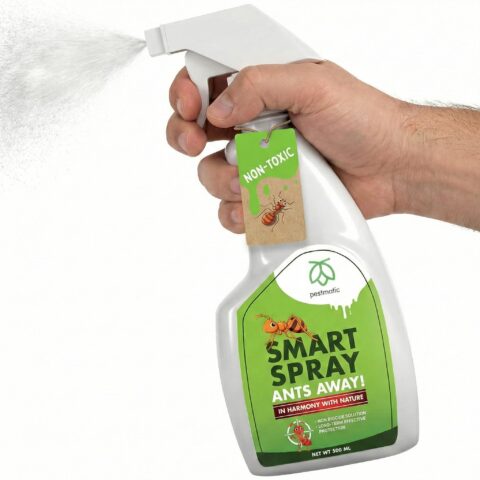
Our Pestmatic Smart Spray Ants Away (500 ml) is a ready-to-use, detergent-based spray: spray the ants and the path they walk on and it washes them away together with the scent trail. Once dry, the treated strip stays on sills, frames, paths and patios as a barrier; top it up after rain or every 7–10 days. It can be used indoors and outdoors, also on plants. It is a non-biocide formula and is not classified as hazardous under CLP.
Which ant control methods work, and what are their limits?
| Method | What it does | Limits |
|---|---|---|
| Cleaning and sealed food storage | Takes away the reason ants come in | Does not remove ants already on a trail |
| Sealing cracks and gaps | Blocks the route from outside | Hard to close every gap in older houses |
| Barrier spray on trail and entry points | Washes ants and scent trail away; leaves a treated strip at sills and doors | Does not reach the nest; needs renewing after rain |
| Ant baits | Workers carry the bait back to the nest | Slower; ants must keep feeding on the bait, so keep food tidy elsewhere |
| Vinegar, lemon, cinnamon | Mask the scent trail for a short time | Temporary; no lasting barrier |
| Pest professional | Finds and treats nests inside walls or under floors | Cost; usually only needed for persistent indoor nests |
Should I get rid of ants in the garden too?
Usually not. The RHS says ants do not directly damage garden plants and suggests tolerating them where possible, because a destroyed colony is soon replaced by new queens. The exceptions are nests right next to the house, ants farming aphids on your plants (they protect aphids from predators in exchange for honeydew) and soil heaps on lawns, which the RHS suggests brushing away on a dry day before mowing. Treat paths, patio joints and the base of walls next to entry points, and leave the rest of the garden alone.
What Smart Spray Ants Away does, and what it does not do
It washes away the ants you can see, removes the scent trail they follow and leaves a barrier on the surfaces you treat. It does not reach a nest hidden in a wall cavity or under the floor, it is not a bait that workers carry back to the colony, and it does not replace cleaning and sealing entry points. If ants keep appearing from inside walls or floors after several weeks of treatment, ask a pest professional to inspect the property.
Ants in the house: FAQ
Why do ants keep coming back after I wipe them up?
Wiping removes the ants you can see but not the scent trail. New workers follow the same route to the food, so wash the whole trail, store food in sealed containers and treat the entry point.
How do I get rid of ants permanently?
Combine three things: no food left out, entry points sealed where possible, and a barrier renewed after rain or every 7–10 days. Ants nesting outside will keep sending scouts, so prevention matters more than a one-off treatment.
Are ants in the house harmful?
The black garden ant that usually comes into UK kitchens is a nuisance rather than a health hazard, but ants walk over bins and floors before reaching food, so throw away anything they have got into.
Does vinegar get rid of ants?
Vinegar masks the scent trail for a short time, but it leaves no lasting barrier and has to be repeated constantly. It works best as a cleaning step, not as the whole solution.
When are ants most active in the UK?
The RHS lists ants as most active from April to October. Flying ants appear on warm, humid summer days, when winged queens and males leave the nest to mate.
Sources: RHS, “Ants” (accessed November 2026)
Related guides: How to get rid of silverfish · How to get rid of pantry moths